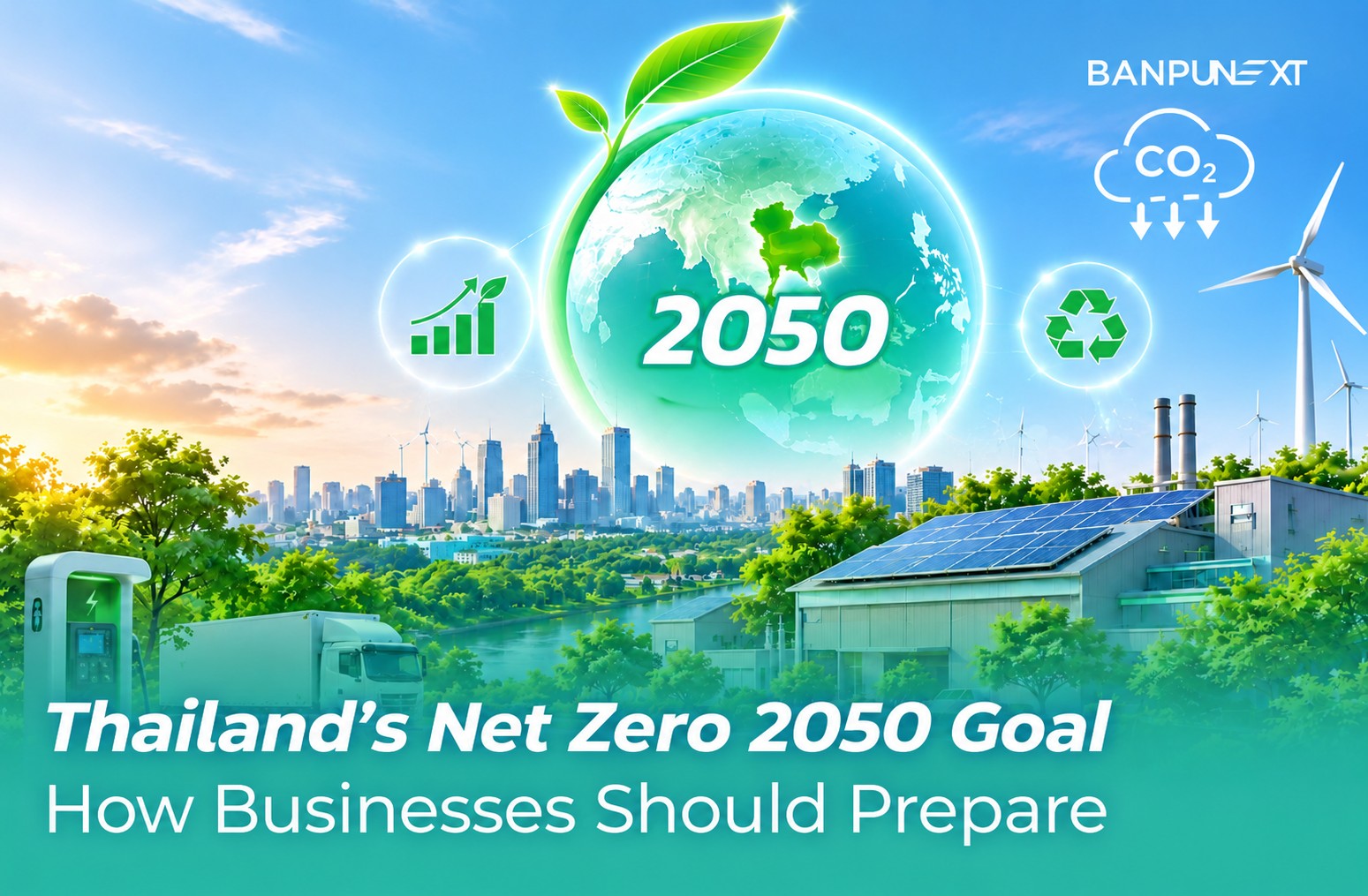
As Thailand accelerates its Net Zero target to 2050 and raises the ambition of its Nationally Determined Contribution (NDC 3.0) in line with efforts to limit global warming to 1.5°C, Thai businesses are facing growing pressure from stricter trade and sustainability requirements, including CBAM, carbon taxes, and ESG criteria from financial institutions.
For businesses, transitioning to Net Zero is key to staying competitive in global markets, attracting investment, and building stronger relationships with sustainability-focused partners.
Choosing the right partner is equally important. As an end-to-end Net Zero Solutions provider and expert Net Zero consultant, Banpu NEXT helps businesses develop practical strategies to reduce energy costs, strengthen long-term competitiveness, and enhance corporate credibility with global investors and partners.
Thailand’s Net Zero 2050 Target: Why Faster Action Matters
Net Zero 2050 means reducing greenhouse gas emissions, including carbon dioxide, methane, and nitrous oxide—to net zero by 2050. This requires cutting emissions from economic activities as much as possible, then balancing any unavoidable residual emissions through carbon removal or other recognized measures, so that emissions released are equal to emissions removed.
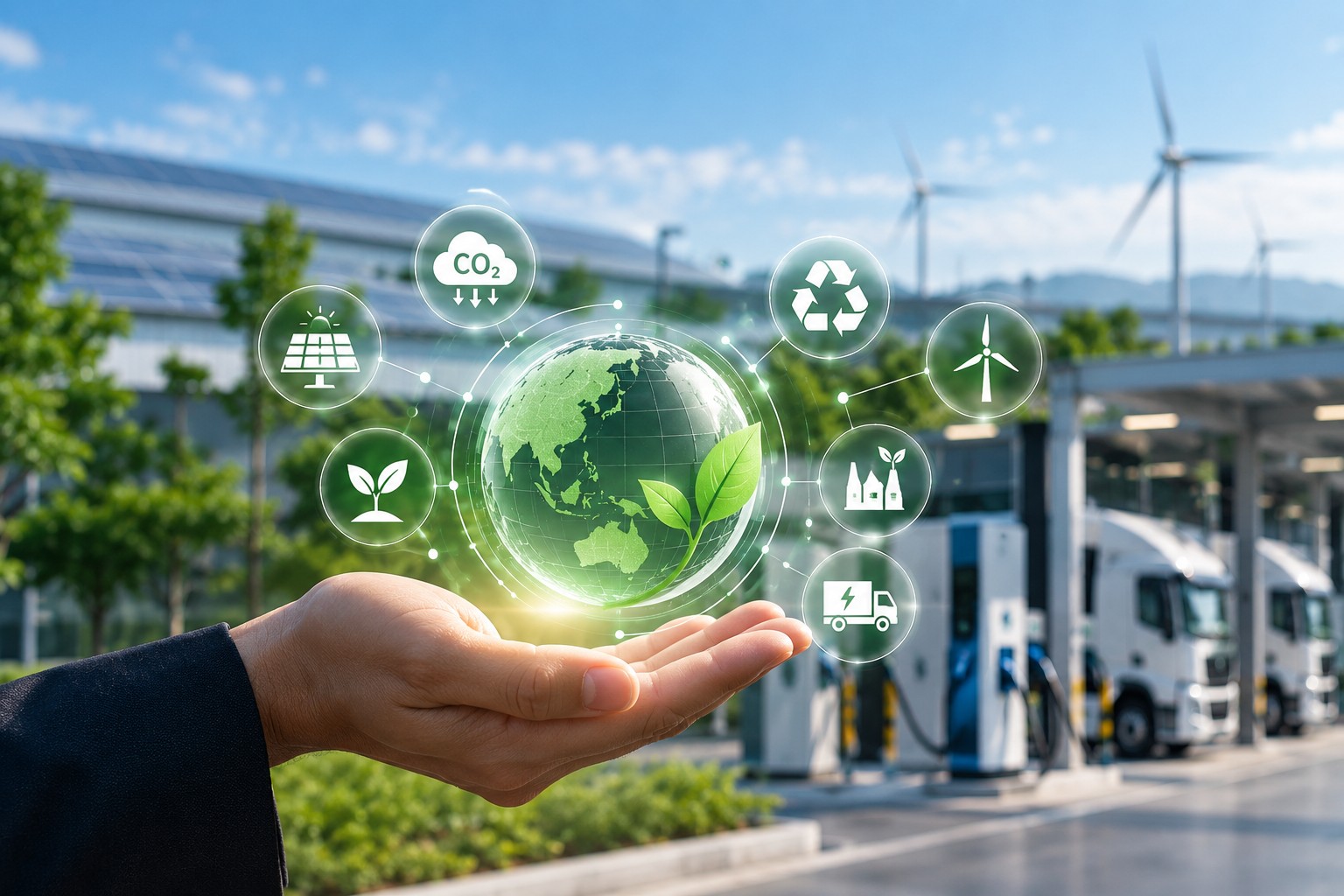
Achieving this target requires a structured, long-term approach—reducing emissions across operations, transitioning commercial fleets to EVs, improving energy efficiency, adopting clean energy, and increasing carbon removal capacity. Together, these actions support progress toward Carbon Neutrality and ultimately Net Zero.
Thailand’s faster Net Zero transition is driven not only by environmental priorities, but also by national competitiveness. As global buyers, export markets, and supply chains place greater emphasis on carbon performance—through CBAM, ESG requirements, and green procurement policies—Thai businesses need to adapt quickly. Accelerating the transition will help businesses meet new trade requirements, strengthen long-term global competitiveness, and support sustainable international growth.
Business Impact: Why Organizations Must Adapt to Net Zero 2050
Net Zero 2050 is reshaping how businesses operate, requiring a shift from traditional models toward more sustainable, environmentally responsible practices. This pressure is being driven by stricter economic and international trade requirements, with three key forces shaping the transition:
- Carbon Measures Affecting Trade, including EU CBAM and Carbon Tax
The EU’s Carbon Border Adjustment Mechanism (CBAM), together with carbon taxes being introduced across multiple countries, is increasing costs for carbon-intensive goods and services. If Thai businesses do not act quickly to measure and reduce emissions, they may face greater competitiveness risks and higher costs when accessing international markets.
- Supply Chain Requirements Favoring Low-Carbon, ESG-Ready Suppliers
As global companies pursue their own Net Zero targets, they are also addressing Scope 3 emissions across their supply chains. This is driving stricter green procurement policies, with major brands increasingly prioritizing suppliers that demonstrate strong ESG performance and lower carbon emissions. Businesses that fail to adapt risk losing supplier status and being disqualified from key global supply chains.
- Green Loan and Sustainable Finance Criteria
Banks and financial institutions worldwide are increasingly aligning lending and investment criteria with sustainability goals. This includes greater support for environmentally responsible projects through Green Finance and lower-cost financing for businesses transitioning toward cleaner energy and more sustainable operations through Transition Finance.
With all three pressures converging, businesses should make Net Zero targets part of their business strategy to manage risk, protect competitiveness, and prepare for the future economy.
How Businesses Can Set Net Zero Targets: 4 Steps to Build a Practical Net Zero Roadmap
A business Net Zero strategy should start with assessing greenhouse gas emissions, followed by setting targets, planning reduction actions, and continuously tracking and reporting progress. A practical Net Zero Roadmap can be structured into four key steps:
1. Measure: Assess Emissions Across Scopes 1, 2, and 3
Start by calculating the organization’s Carbon Footprint for Organization (CFO) to establish an emissions baseline. The assessment should cover Scope 1 direct emissions, Scope 2 emissions from purchased energy, and Scope 3 value chain emissions such as purchased materials, supplier logistics, employee commuting, use of sold products, and other business-related activities, in line with the GHG Protocol. This helps identify the largest emission sources and prioritize where carbon reductions should begin.
2. Target Setting: Set Science-Based Targets
Once emissions are measured, businesses should set clear, realistic reduction targets—covering both near-term goals within 5–10 years and a long-term target to be achieved by 2050, in line with international standards such as the Science Based Targets initiative (SBTi), organizations can work toward reducing emissions across Scopes 1, 2, and 3 by at least 90% by 2050, in line with the 1.5°C pathway.
3. Decarbonization Solutions: Drive Long-Term Emissions Reduction with Clean Energy Technology
Develop decarbonization solutions tailored to the business’s key emission sources. This can include low-carbon production processes, energy efficiency, and clean energy solutions such as Solar and Battery Energy Storage System (BESS) for factories and offices, commercial EV fleets and on-site charging station, and AI-powered route optimization and real-time energy management.
Businesses should prioritize actions based on carbon reduction target, budget, and payback period, while setting clear KPIs and tracking performance to ensure clean energy investments directly support their Net Zero goals.
4. Offset & ESG Reporting: Address Residual Emissions and Disclose Sustainability Report
For residual emissions that cannot yet be avoided, businesses can offset them through carbon credits while preparing sustainability reports and disclosing ESG performance across environmental, social, and governance factors. Transparent reporting helps build trust with customers, business partners, and investors.
Following these four Net Zero Roadmap steps helps businesses move toward their targets with greater clarity, reduce exposure to rising carbon and energy costs, and strengthen long-term global competitiveness.
Who are the key Net Zero Solutions Provider in Thailand?
Banpu NEXT is an end-to-end Net Zero Solutions provider in Thailand and the Asia-Pacific region. Its one-stop service covers Net Zero consultation, roadmap development, decarbonization solutions, sustainability reporting, after-sales support, and digital platforms powered by AI for more efficient carbon footprint calculation and real-time energy management.
These comprehensive solutions help businesses reduce carbon emissions across all Scopes while improving overall energy efficiency.
Banpu NEXT’s comprehensive Net Zero Solutions include:
Delivered by experts in sustainability and Net Zero planning, the service covers consultation, Net Zero Roadmap development, greenhouse gas emissions assessment, and decarbonization methods across Scopes 1, 2, and 3.
This helps businesses build a more accurate carbon reduction plan, strengthen ESG readiness, disclose sustainability report, and move toward their Net Zero targets with greater confidence.
Offers a wide range of solar systems, including Solar Rooftop, Solar Carport, and Floating Solar, integrated with Battery Energy Storage Systems (BESS).
BESS supports 24/7 backup power, helping businesses maintain stable clean energy supply, improve operational continuity, and reduce reliance on the grid.
Offers commercial EV leasing and rental, along with route charging on major highways and on-site charging for EV trucks at business premises. The service also includes a fleet management platform for route planning and transport optimization.
AI-powered temperature control systems monitor, analyze, and optimize energy use in real time—helping improve energy efficiency and reduce electricity costs.

Turn Net Zero 2050 into a Business Opportunity and Market Competitiveness
The transition to Net Zero is a business priority that requires action today, supported by clear targets and a systematic long-term plan. This helps businesses prepare for international trade measures, carbon regulations, and growing ESG requirements from partners and financial institutions.
Partnering with an expert, end-to-end Net Zero Solutions provider like Banpu NEXT gives businesses Net Zero consulting support to overcome technology barriers, reduce energy costs, and improve operational efficiency through clean energy solutions integrated with digital platforms. This enable businesses to strengthen their competitiveness in global market, unlock sustainable growth opportunities, and turn their Net Zero goals into tangible results.
Frequently Asked Questions (FAQ)
Q: How Is Thailand’s Net Zero 2050 Target Different from Carbon Neutrality?
- A: Carbon Neutrality focuses on balancing carbon dioxide (CO₂) emissions through reductions and offsets. Net Zero, by contrast, covers seven major greenhouse gases, including methane and nitrous oxide. Net Zero prioritizes reducing emissions at the source as much as possible, with offsets used only for residual emissions that cannot be eliminated.
Q: How Can Businesses Align Their Net Zero Targets with Thailand’s 2050 Goal?
- A: Businesses should start by assessing their current organizational carbon footprint across Scopes 1, 2, and 3. Then set targets based on emission reduction rates aligned with international standards such as SBTi, including near-term targets, and plan reductions across all three Scopes to ensure steady progress and full coverage of emissions. Businesses should also develop decarbonization solutions that define how emissions will be reduced through operational improvements and clean energy, supporting progress toward Net Zero by 2050 or earlier.
Q: Which Net Zero Provider in Thailand Offers End-to-End Solutions?
- A: Banpu NEXT is a leading Net Zero Solutions provider in Thailand and the Asia-Pacific region, offering end-to-end services including Net Zero consultation, Solar and BESS, EV fleet and charging solutions, AI-powered systems and smart digital platforms that enhance energy efficiency and deliver measurable carbon reduction.