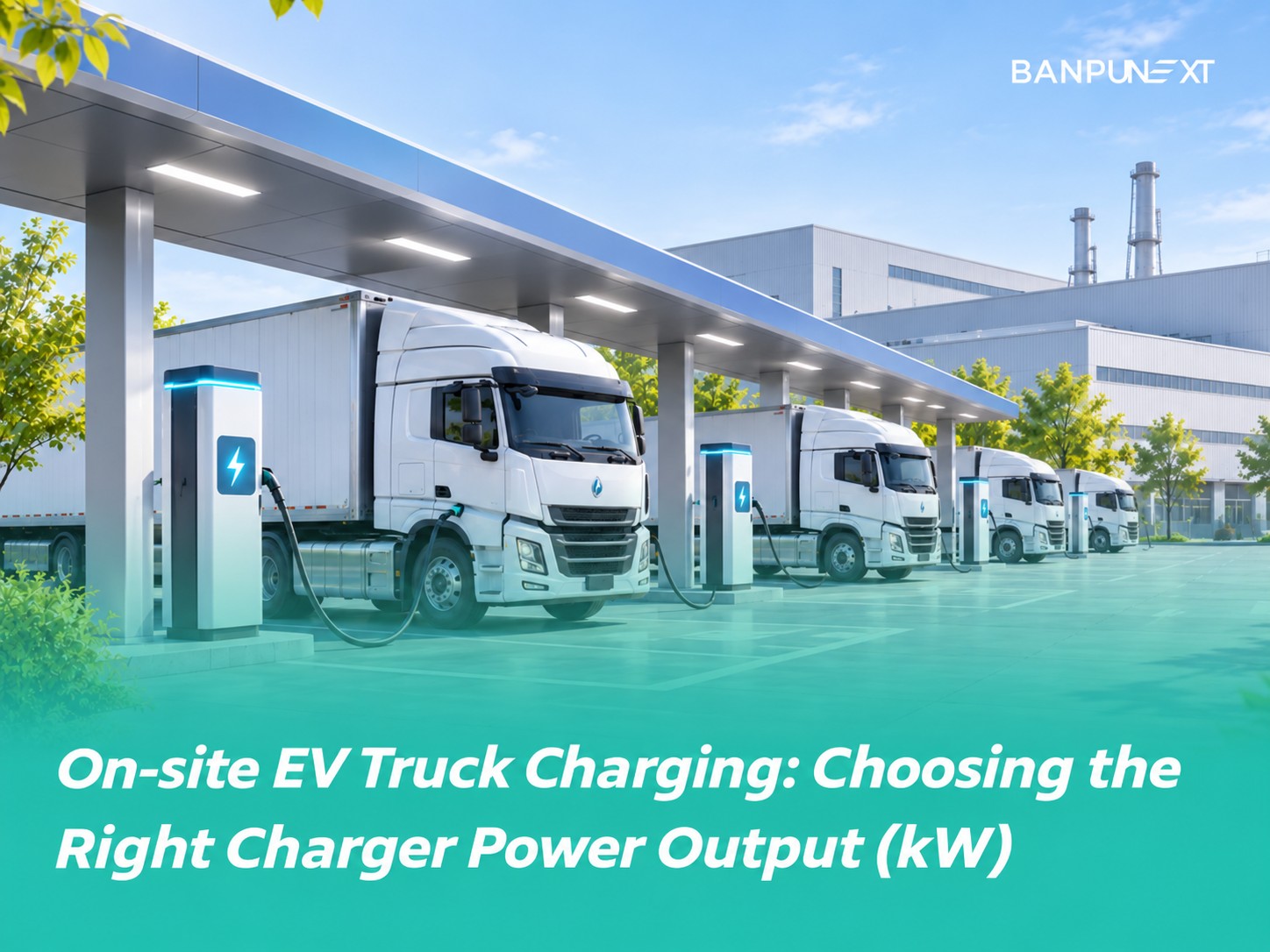
Today’s logistics businesses face multiple challenges, from volatile fuel costs and carbon reduction targets to growing ESG requirements across the supply chain. Transitioning to EV trucks and commercial electric vehicles is becoming a key strategy for modern logistics—but to make the shift truly cost-effective, charging infrastructure must be designed around each vehicle’s operating schedule.
Choosing the right EV truck charger depends on battery capacity, distance per trip, vehicle dwell time, and daily trip frequency. The goal is to ensure sufficient charging power to meet operational needs without unnecessary investment.
This article explains how to select the right charging capacity for different EV truck duty cycles, whether installing an On-site EV truck charging is worth the investment, how to choose the right provider, and where public EV truck charging is currently available in Thailand.
Banpu NEXT offers two EV truck charging solutions: Route Charging along major logistics corridors, using high-power chargers to support efficient transport operations, and On-Site Charging for warehouses, distribution centers, and industrial facilities. These solutions help businesses plan charging schedules and fleet operations more effectively.
Why Charger Power Output (kW) Directly Impacts Logistics Profitability
In transport and logistics, time directly affects profitability. Every hour a truck spends charging is time it is not generating revenue. Charging time depends mainly on two factors: battery capacity and charger power. Most passenger EVs use batteries of around 40–80 kWh, while EV trucks and commercial electric vehicles require much larger batteries to support longer daily mileage, heavier loads, and more frequent trips. Medium- to heavy-duty electric trucks typically use batteries starting from around 200 kWh.
This is why standard chargers commonly found at homes, shopping centers, or retail locations are not suitable for commercial heavy-duty fleets. Charging can take 8–12 hours per vehicle, reducing fleet utilization and limiting revenue-generating trips.
Choosing the right charger for each vehicle and duty cycle is essential for long-term efficiency and cost-effectiveness. For commercial EV fleets operating long distances or multiple trips per day, high-power DC charging can significantly reduce downtime, charging large batteries to around 80% in 1–2 hours (depending on charger output and battery capacity). This can align charging with driver breaks or loading and unloading periods, helping EV trucks maintain efficient, continuous operations on long-haul routes.
Choosing the right charger power output (kW) is essential for efficient fleet operations and minimizing downtime. Faster charging means more time delivering, more revenue-generating trips, and a faster return on investment from switching to EV trucks.
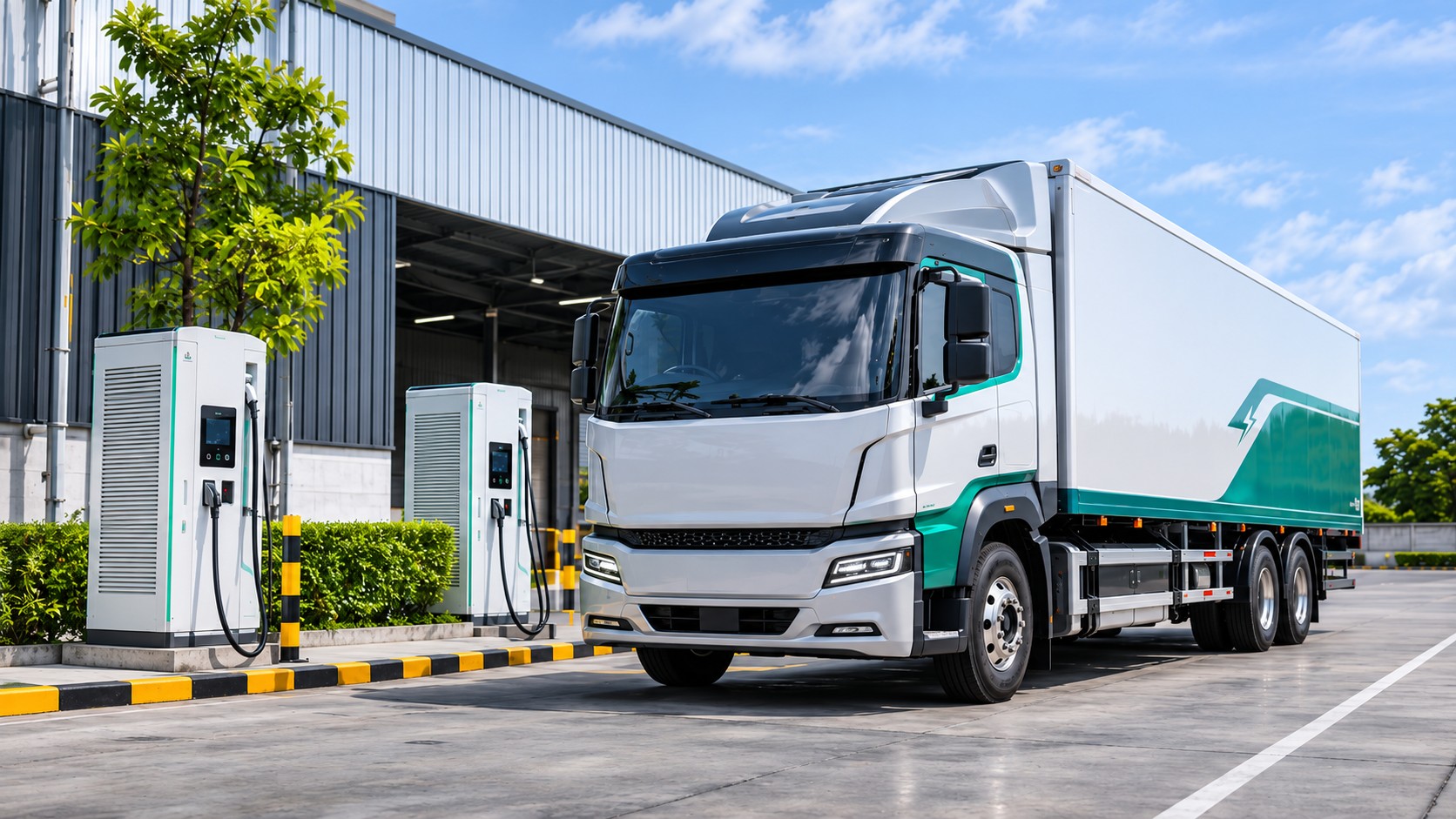
3 Ways to Match Charger Power Output (kW) with EV Truck Duty Cycles
Matching charger power output (kW) to each EV truck’s operation cycle and route distance helps businesses optimize operating time, reduce charging downtime, and maximize the return on charging infrastructure investment.
Charging systems can support everything from short-haul to long-haul EV trucks. Today, 240 kW chargers are widely used, particularly for fleets operating on interprovincial routes.
1. Short-Haul & Last-Mile Delivery
For urban delivery fleets covering around 150–200 km per day with overnight depot parking, a 50–120 kW DC charger is typically suitable. It supports quick top-ups during lunch breaks or loading periods, while overnight charging can take advantage of lower TOU Off-Peak rates to reduce electricity costs.
2. Mid-Haul & Hub-to-Hub
For fleets covering around 200–400 km per day with only 1–2 hours available for charging during loading or driver breaks, a 180–240 kW DC fast charger is typically suitable. It enables rapid top-up charging, minimizes downtime, and keeps vehicles ready for the next route.
H3: 3. Long-Haul & Heavy-Duty Operations
For heavy-duty trucks operating continuously with minimal downtime, Dual-dispenser DC fast chargers rated at 240–360 kW or above are typically recommended. They can charge from 20% to 80% in around 45–60 minutes, supporting intensive operations and 24/7 fleet rotation.
Banpu NEXT provides charging solutions for all types of EV trucks and commercial fleets, with systems designed and installed to match each fleet’s size and operating needs. Its DC fast charging systems start from 240 kW per charger and can scale beyond 360 kW for Tractor-trailers or heavy-duty trucks, depending on customer requirements.
Comparison of Charger Power Output (kW) by EV Truck Duty Cycle
| Operation Type | Daily Distance | Charging Window | Recommended Power Output | Business Benefit |
| Short-Haul & Last Mile | 150–200 km | Midday breaks, loading periods, or overnight depot charging | 50–120 kW DC Charger | Lower electricity costs through TOU Off-Peak charging and greater flexibility for additional daytime trips |
| Mid-Haul & Hub-to-Hub | 200–400 km | 1–2 hour top-ups at route charging or on-site stations during loading and shift changes | 180–240 kW DC Fast Charger | Faster charging, reduced downtime, and reliable turnaround for interprovincial routes |
| Long-Haul & Heavy Duty | Over 400 km or 24/7 operations | Fast charging along logistics routes, during rest breaks, or rapid on-site charging during shift changes; typically 45–60 minutes | 240–360+ kW dual- dispenser DC Fast Charger | Supports multiple tractor-trailers and heavy-duty trucks, shortens charging time, and increases trips per day |
Choosing a charger should not be based on maximum power alone. Businesses also need to consider daily mileage, vehicle dwell time, and fleet turnaround. Matching charger power and the number of charging points to actual operations helps keep EV truck fleets running smoothly while maximizing investment value and controlling operating costs.
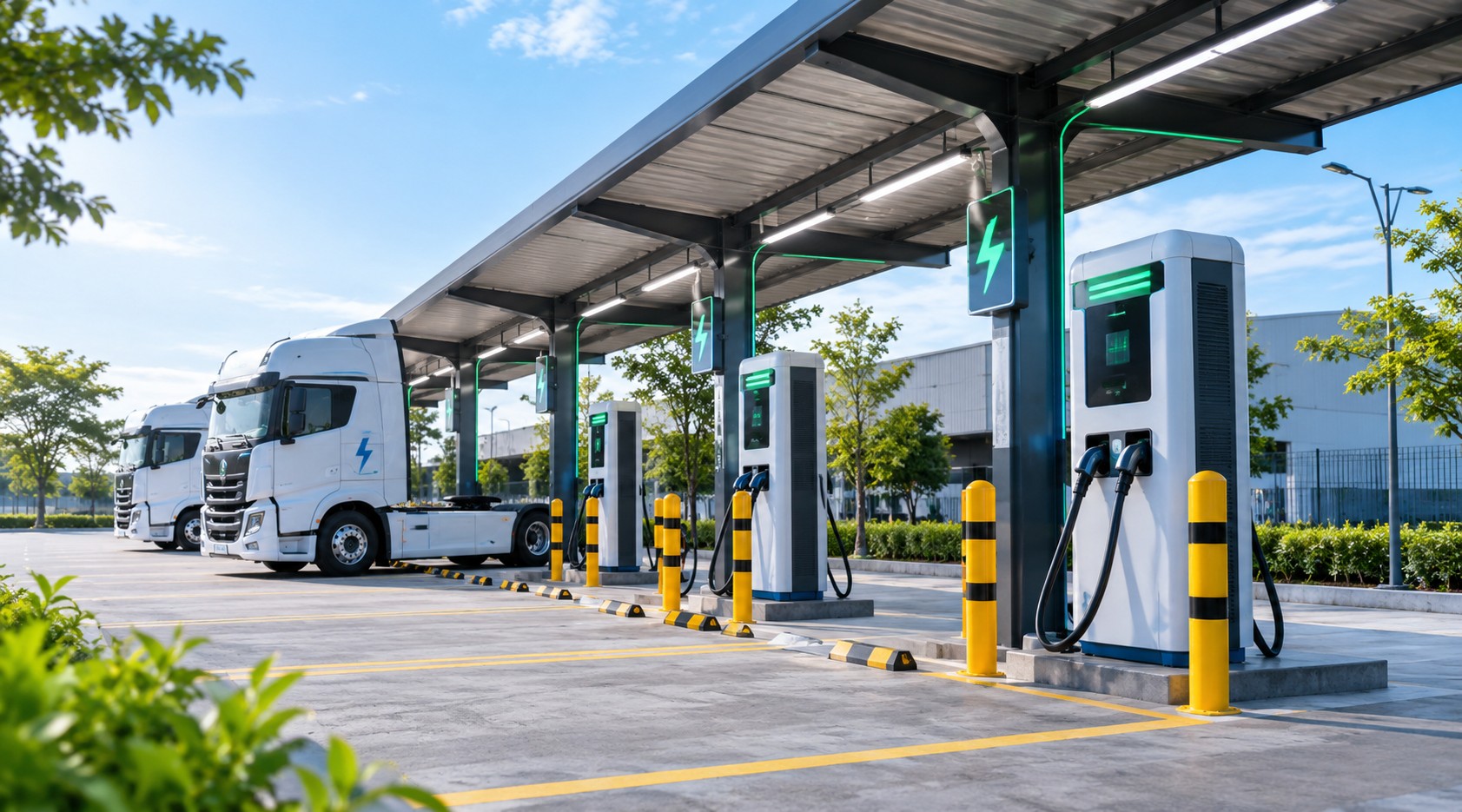
Public EV Truck Charging in Thailand: Where Can Fleets Charge?
Public passenger EV charging stations often have limitations in charging power, charging time, parking space, access, and turning radius, making them less suitable for large electric truck fleets. Sharing charging facilities with smaller vehicles can also increase congestion and operational risk.
EV trucks are therefore better served by dedicated heavy-duty charging stations located along major logistics routes, with high-power DC fast charging, truck-friendly access and parking, and advance booking options to reduce waiting time and improve route planning.
Banpu NEXT provides Route Charging for EV trucks along Thailand’s major logistics corridors, connecting the Central, Northeastern, and Eastern regions via Phahonyothin Road, Mittraphap Road, and Motorway No. 7 (Bangkok–Chonburi) in 9 provinces; Samut Prakan, Samut Sakhon, Pathum Thani, Saraburi, Nakhon Sawan, Nakhon Ratchasima, Khon Kaen, Udon Thani, and Chonburi—supporting modern logistics businesses with fast, safe, and cost-efficient long-haul transport.
An effective EV truck charging station should be purpose-built for heavy-duty vehicles, with suitable parking space, turning radius, traffic flow, charging power, and a booking system. These factors directly affect charging time, station access, and overall fleet turnaround.
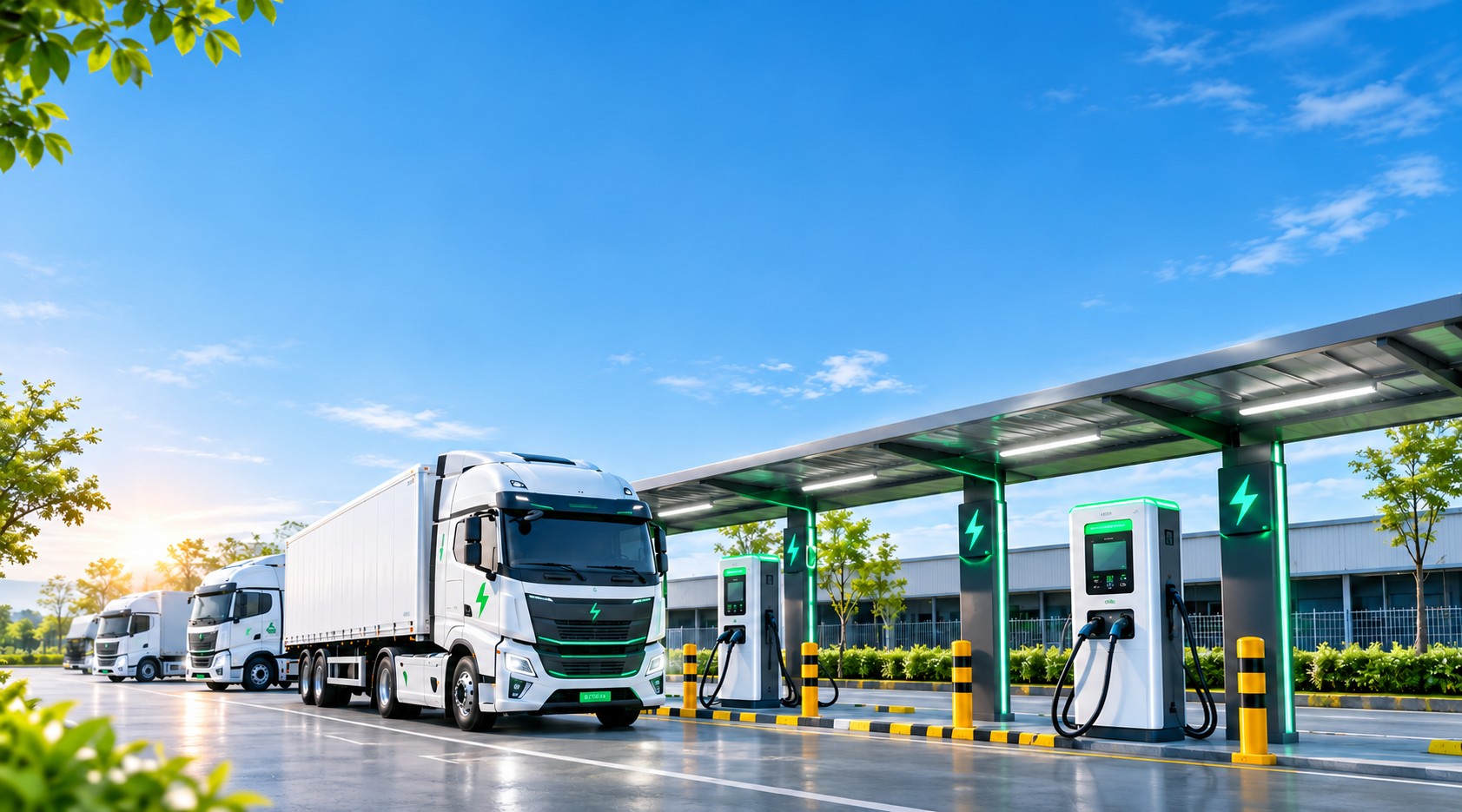
Banpu NEXT Fleet Charging Solutions: Two Options for EV Trucks
Banpu NEXT provides Fleet Charging Solutions for EV trucks and commercial electric vehicles, covering both route charging and on-site charging at business premises. These solutions help businesses plan charging locations around routes and fleet size, while managing charging and operating schedules more efficiently. The service is available in two main formats:
1. Route Charging Along Major Logistics Corridors
Banpu NEXT currently operates 9 EV truck charging stations across key logistics routes connecting Central, Northeastern, and Eastern Thailand. Locations include Samut Prakan, Samut Sakhon, Pathum Thani, Saraburi, Nakhon Sawan, Nakhon Ratchasima, Khon Kaen, Udon Thani, and Chonburi.
- Fleet Charging: Route Charging Samut Prakan
- Fleet Charging: Route Charging Samut Sakhon
- Fleet Charging: Route Charging Pathum Thani
- Fleet Charging: Route Charging Saraburi
- Fleet Charging: Route Charging Nakhon Sawan
- Fleet Charging: Route Charging Nakhon Ratchasima
- Fleet Charging: Route Charging Khon Kaen
- Fleet Charging: Route Charging Udon Thani
- Fleet Charging: Route Charging Chonburi
A key advantage of Route Charging is its high-power DC fast charging, with spacious station layouts designed specifically for large commercial vehicles and trucks. Easy access, safe maneuvering, and advance booking help reduce charging queues and improve route planning. Charging rates start from THB 5.5 per kWh, with monthly usage reports to support fleet management and performance analysis.
- On-Site Charging at Business Premises
Is on-site EV truck charging worth the investment, and which provider should you choose? For businesses with regular truck fleets returning daily to warehouses, distribution centers, or factories, installing on-site charging at their locations makes it easier to manage charging schedules and fleet operations. It also reduces reliance on public charging and en-route stops, while allowing businesses to charge during Off-Peak periods, such as overnight, to help control electricity costs.
Banpu NEXT provides end-to-end On-Site Charging solutions at business premises with no upfront investment in charging equipment or installation. Customers simply pay the service fee agreed under the contract. The service covers fleet analysis, operating patterns, and duty cycles to determine the right system design and number of charging points. High-power DC fast chargers start from 240 kW per charger, depending on customer requirements.
Banpu NEXT also provides a fleet management system with real-time charging data, monthly usage reports, and ongoing after-sales support throughout the system lifecycle.
Banpu NEXT offers two EV truck charging solutions: Route Charging along transport routes across 9 provinces and On-Site Charging at business premises, which gives businesses full control over charging schedules with a system tailored to their fleet size. These solutions help transport and logistics businesses plan charging and fleet operations more accurately, reduce downtime, lower operating costs, and improve overall transport efficiency—making the transition to EV trucks more cost-effective in the long term.
Frequently Asked Questions (FAQ)
Q: How Long Does It Take to Charge an EV Truck?
- A: Charging time depends on the battery capacity and charger power (kW). For large EV trucks with batteries of 200 kWh or more, using a 150–360 kW DC fast charger can typically provide a full charge in around 1–2 hours.
Q: Is Installing an on-site EV Truck Charging Worth It, and Which Provider Should You Choose?
- A: Installing an on-site EV truck charging at business premises can help transport businesses reduce long-term energy and maintenance costs, with energy savings of up to 50% compared with diesel, while also lowering vehicle maintenance expenses.
When choosing a provider, look for an end-to-end solution such as Banpu NEXT, which offers both Route Charging along major logistics corridors and On-Site Charging for business locations. Its service covers fleet usage analysis, system design, charger installation, fleet management, maintenance, and expert support throughout the entire process.
Q: Where are Public EV Trucks Charging Stations in Thailand? Which Provider is Available?
- A: Banpu NEXT operates 9 Route Charging stations for EV trucks along major logistics corridors connecting Central, Northeastern, and Eastern Thailand, including Phahonyothin Road, Mittraphap Road, and Motorway No. 7 (Bangkok–Chonburi). The stations are located in Samut Prakan, Samut Sakhon, Pathum Thani, Saraburi, Nakhon Sawan, Nakhon Ratchasima, Khon Kaen, Udon Thani, and Chonburi.
Q: Does Installing a High-Power DC Fast Charger Require Approval from the Electricity Authority?
- A: The site’s electrical system must first be assessed and may require a transformer upgrade or a separate meter for the chargers, as charging multiple EV trucks simultaneously can create significant power demand. Banpu NEXT provides engineering support throughout the process, starting with a site assessment to evaluate existing electrical loads and available capacity, followed by system design and installation tailored to the site for safe and efficient operation.