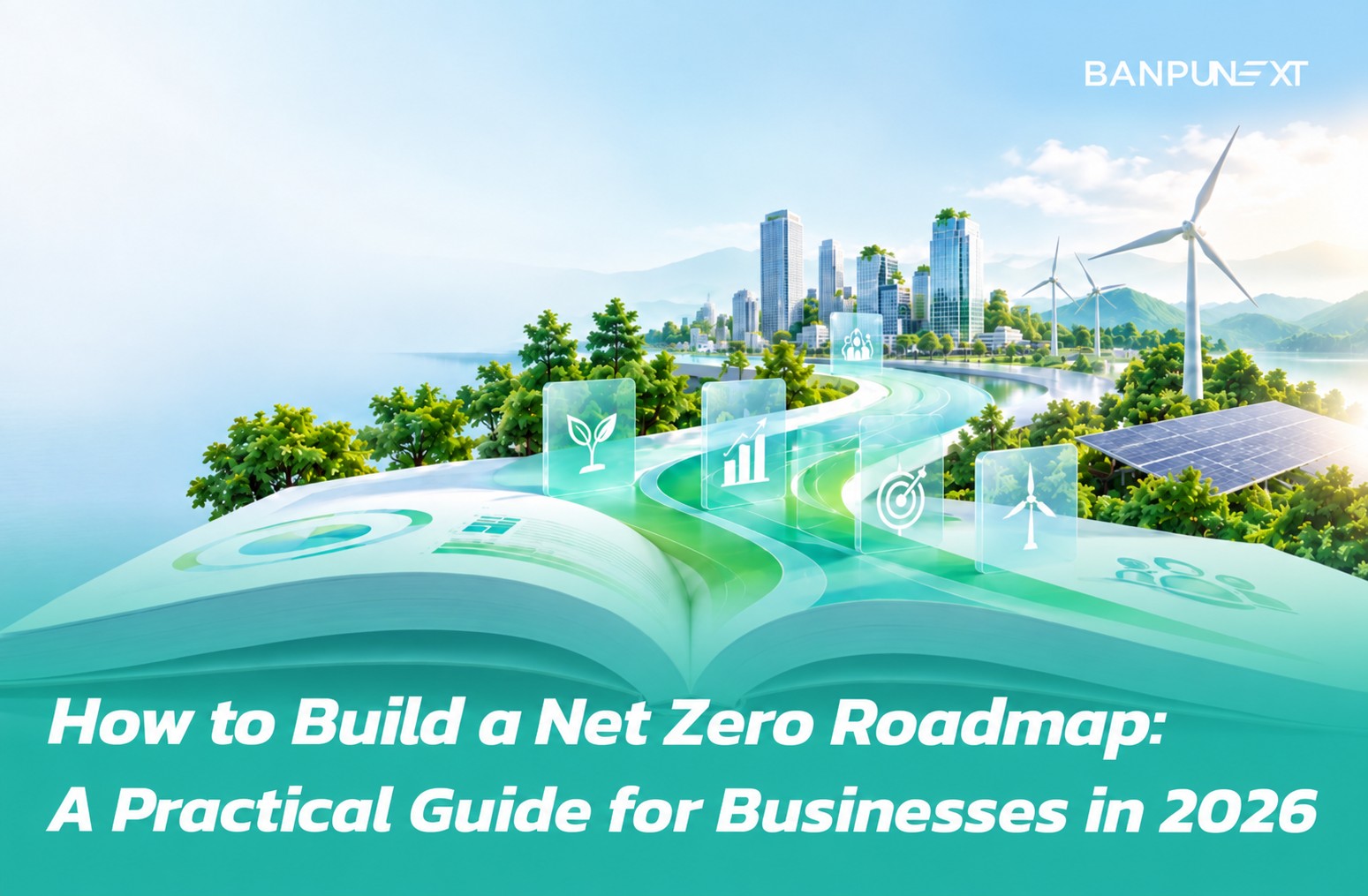
A Net Zero Roadmap is a long-term plan that sets out a clear path for businesses to systematically reduce greenhouse gas emissions and achieve their Net Zero goals. It begins with defining emission scopes and baselines, setting clear targets and timelines, then implementing reduction measures such as low-carbon operations, energy efficiency, and clean energy adoption.
Progress should be tracked through measurable KPIs, while residual emissions that cannot yet be eliminated can be addressed through carbon credits or carbon removal.
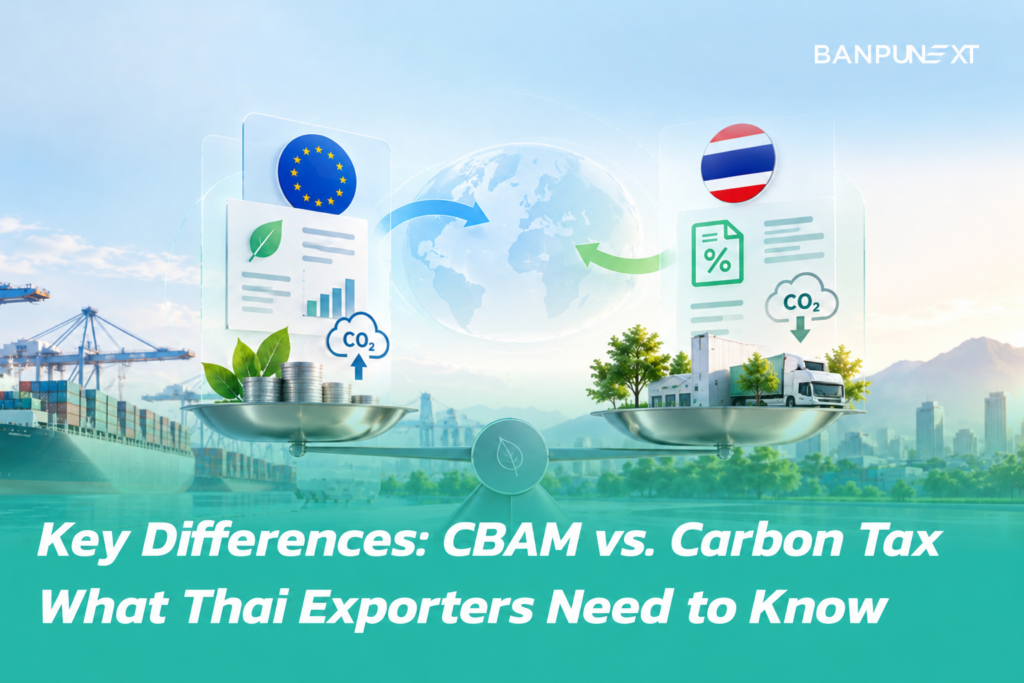
In 2026, environmental regulations are having a more direct impact on business operations. The EU CBAM entered its definitive phase on 1 January 2026, covering sectors such as iron and steel, aluminium, cement, fertilisers, electricity, and hydrogen. At the same time, businesses are facing evolving carbon tax policies in Thailand and growing ESG requirements from customers, investors, and financial institutions. A Net Zero Roadmap is therefore more than an environmental plan—it is a strategic framework for business growth. It helps companies identify where to reduce emissions first, how to invest in clean energy, and which KPIs to use to track progress.
With a structured roadmap and expert support in designing the implementation strategy, businesses can move toward Net Zero with greater confidence while reducing costs and strengthening long-term competitiveness.
Why Thai Businesses Need to Build a Net Zero Roadmap in 2026
As carbon regulations take effect and global supply chain requirements become more stringent, a Net Zero Roadmap has become a strategic business tool for managing risk, unlocking new opportunities, and building resilience in a low-carbon economy.
A well-defined roadmap can create value across multiple areas, including:
- Reduce Energy Costs
Improving energy efficiency and transitioning to clean energy can lower long-term energy expenses and help businesses manage energy use more cost-effectively.
- Strengthen Supply Chain Relationships
Global brands increasingly expect suppliers to disclose greenhouse gas emissions and demonstrate clear carbon reduction plans to support their own Scope 3 targets. Businesses with a credible Net Zero strategy are better positioned to retain existing partners and improve their chances of being selected for new supply chain opportunities.
- Strengthen Global Competitiveness
A clear Net Zero strategy helps businesses prepare for carbon-related regulations such as CBAM and carbon tax policies, reducing regulatory risk and supporting long-term competitiveness in global markets.
- Access Green Finance
Many financial institutions are increasingly using ESG criteria in lending decisions. Businesses with clear carbon reduction plans may have better access to green loans, sustainability-linked financing, and other financial incentives.
How to Set Net Zero Targets Aligned with Global Standards
To establish credible and internationally recognized Net Zero targets, businesses can follow frameworks such as the SBTi (Science Based Targets initiative) . SBTi provides a science-based approach to reducing greenhouse gas emissions in line with the 1.5°C pathway.
Targets are typically structured into two key phases:
- Near-Term Targets
Set greenhouse gas reduction targets for the next 5–10 years, covering Scopes 1, 2, and 3. These targets ensure continuous progress and reductions across all emission scopes.
- Long-Term Net Zero Targets
Set long-term targets to reduce greenhouse gas emissions across Scopes 1, 2, and 3 by at least 90% by 2050, in line with Thailand’s Net Zero target, or earlier depending on each company’s ambition. Any residual emissions that cannot be eliminated should then be addressed through carbon removal to achieve Net Zero.
Setting clear, science-based targets not only strengthens credibility with partners and investors but also gives businesses a practical framework to allocate resources, utilize clean energy technologies, and mitigate risk precisely throughout their Net Zero journey.

How to Build a Net Zero Roadmap: 4 Practical Steps
A Net Zero Roadmap starts with understanding where an organization’s emission activities come from and how much it emits. From there, businesses can plan their operations in four key steps: measuring emissions, setting targets and action plans, reducing carbon emissions and adopting clean energy, then tracking progress and offsetting residual emissions. This structured approach enables businesses to progress toward Net Zero systematically and cost-effectively.
Step 1: Measure – Calculate Your Corporate Carbon Footprint
Start by defining the organizational scope and selecting a baseline year with complete, reliable data. Then collect key information such as electricity bills, fuel consumption, raw material purchases, and transportation activities to calculate the organization’s carbon footprint in line with the GHG Protocol.
The assessment should cover all three emission scopes:
- Scope 1 Direct Emissions from Owned or Controlled Sources
Examples include fuel combustion in facilities, company-owned vehicles, and refrigerant leaks.
- Scope 2 Indirect Emissions from Purchased Energy
This includes purchased electricity, steam, heating, or cooling supplied by external providers.
- Scope 3 Other Indirect Emissions across the Value Chain
Covers both upstream and downstream activities, such as purchased materials, third-party transportation, employee commuting by private or public transport, customers’ use of sold products, and end-of-life treatment of products.
Measuring emissions across all three Scopes helps businesses identify their total carbon footprint, pinpoint the largest emission sources, and prioritize where reductions should begin.
Step 2: Plan & Prioritize – Set Targets and Reduction Actions
Set clear reduction targets for each Scope and define the timeline for achieving them. Then compare each initiative by emissions reduction potential, investment cost, and payback period to prioritize the most effective actions first.
Quick Wins with Low Investment
Improve equipment efficiency, eliminate unnecessary energy use, and fix energy-wasting equipment.
- Investment-Driven Actions
Upgrade to high-efficiency machinery, adopt lower-impact refrigerants, implement energy management systems, switch to renewable energy, and transition diesel fleets to EVs.
Businesses should define clear budgets, timelines, and reduction targets for each initiative, while working with suppliers and partners to reduce Scope 3 emissions from materials and transportation.
Step 3: Execute – Deploy Clean Energy Technologies
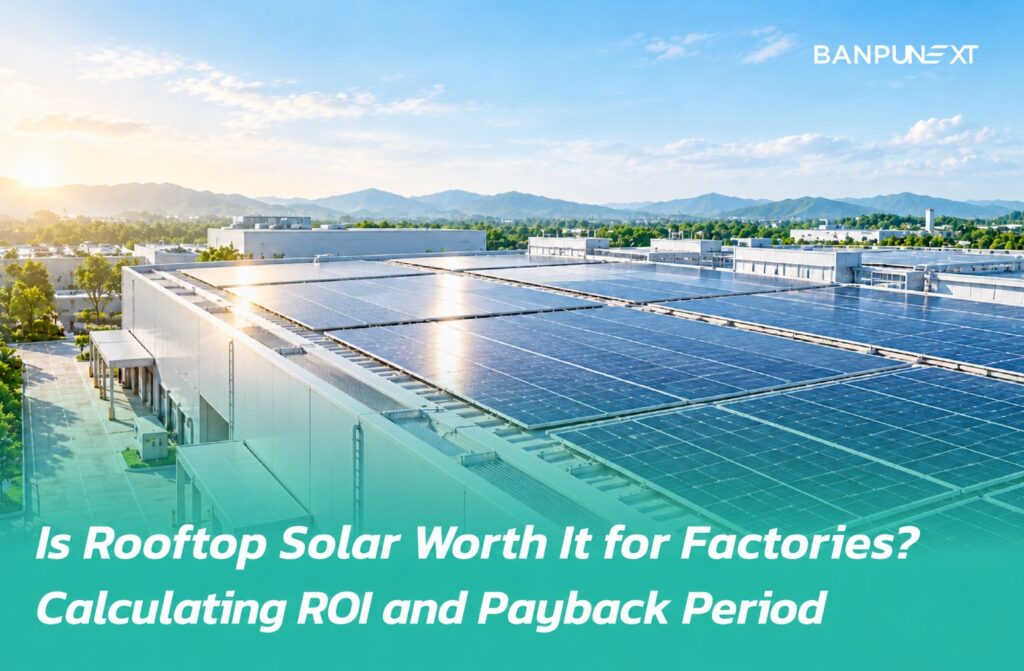
Turn strategy into action with solutions such as Solar Rooftop and BESS, Smart Energy Management, AI-controlled cooling systems, and commercial EV fleets. These technologies help optimize energy use in real time, lower energy costs, and reduce carbon emissions.
Step 4: Track & Offset – Measure, Report, and Offset Residual Emissions
Track progress against key metrics such as energy use, cost savings, and emissions reductions. Use verified data to prepare carbon footprint and sustainability reports, and review performance regularly. If targets are not being met, identify the causes and adjust approach accordingly.
Under the SBTi criteria, organizations must report the use of carbon credits separately from their own emissions reductions, and these credits cannot be counted toward meeting reduction targets.
To achieve Net Zero, businesses must first reduce emissions in line with SBTi requirements, then neutralize residual emissions through carbon removal with permanent storage—either through their own projects or eligible removal-based carbon credits.
These four steps give businesses a clear path for where to start, how to invest, and track progress. With reliable data and consistent action, organizations can reduce energy costs and move toward Net Zero in a structured, measurable way.
Your Sustainability Partners: Net Zero Solutions Provider and Consultants in Thailand
Achieving Net Zero requires more than a strong strategy. The right partner can help businesses execute their roadmap with greater confidence, simplify implementation, and advance their Net Zero goals.
Where to Find an End-to-End Net Zero Solutions Provider in Thailand
Banpu NEXT provides end-to-end Net Zero Solutions for business and industrial sectors. Its Net Zero Consultation services cover strategy development, Net Zero Roadmap design, greenhouse gas assessment, and tailored decarbonization solutions across Scopes 1, 2, and 3.
This end-to-end approach helps businesses turn long-term Net Zero goals into practical, actionable plans.
Generate solar power and store excess energy for 24/7 use, helping businesses maintain a reliable and stable power supply. Each system is tailored to the site and its energy needs.
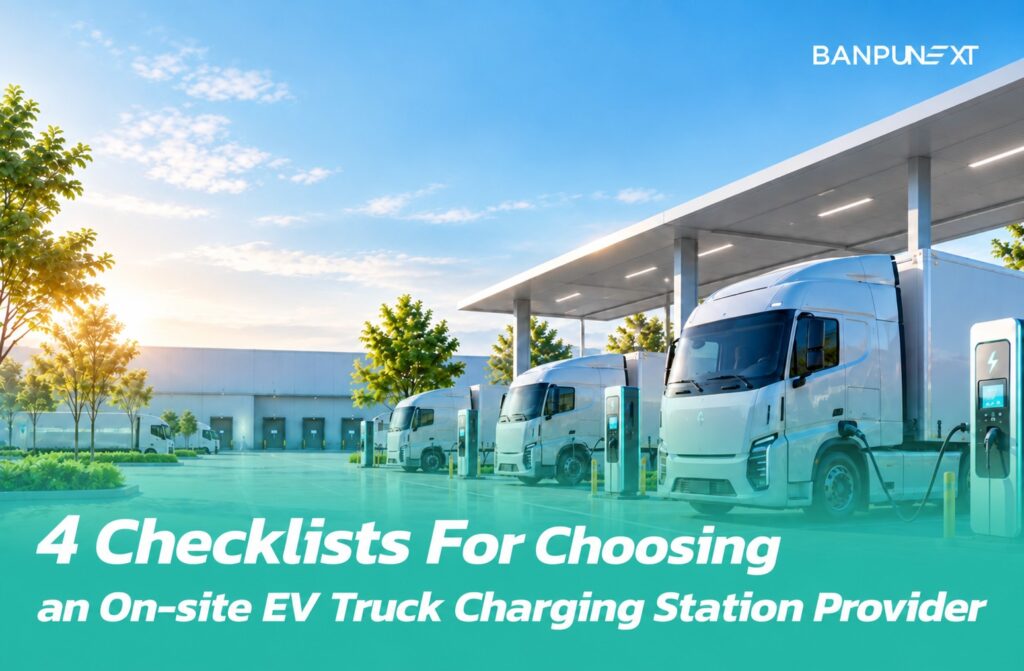
Commercial EV fleet rental and leasing services, EV truck public charging stations along major logistics routes and on-site charging at business premises, and AI-powered route planning and optimization platform also helps reduce energy costs, and improve transport efficiency.
Monitor, analyze, and optimize energy systems in real time to reduce unnecessary consumption, improve efficiency, and lower electricity costs across buildings and industrial facilities.
Banpu NEXT also uses AI-powered platforms to improve the accuracy of carbon footprint calculation and tracking. Its Net Zero Consultation services also cover corporate greenhouse gas reporting and sustainability reporting, helping businesses demonstrate environmental responsibility and build confidence among investors and supply chain partners. With this end-to-end approach, Banpu NEXT helps businesses execute their Net Zero Roadmap more effectively and achieve measurable carbon reductions.
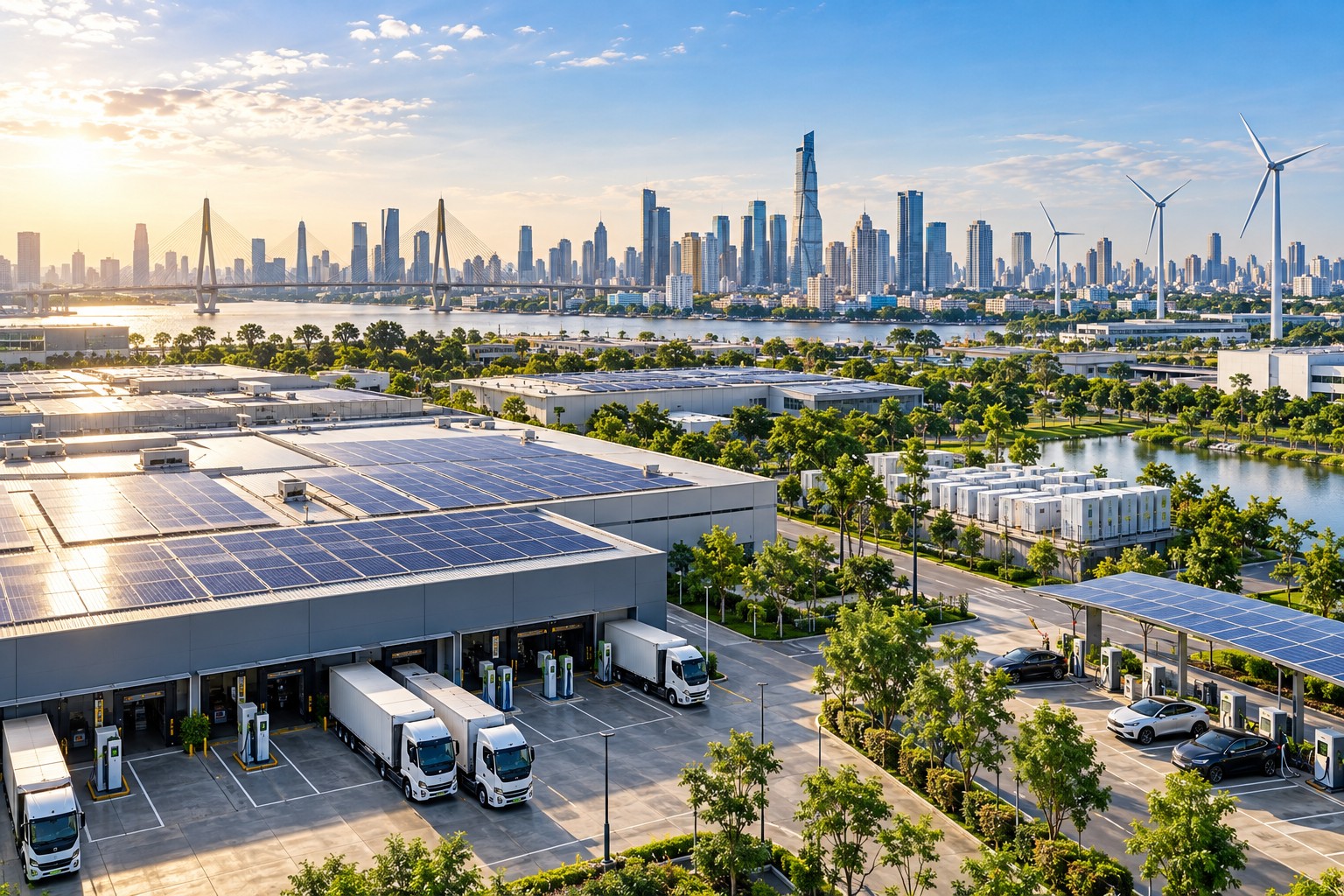
Start Your Net Zero Roadmap Today and Build Long-Term Advantage
Businesses can start their Net Zero Roadmap by measuring emissions, setting clear targets, prioritizing reduction actions, and tracking progress over time. Clear targets and structured plan helps organizations prioritize their actions and investments, reduce energy waste, meet growing environmental expectations from customers and partners, and strengthen long-term competitiveness.
Banpu NEXT is a long-term Net Zero Partner for businesses, offering end-to-end solutions and expert support at every stage—from assessment and planning to clean energy technologies and decarbonization strategies. This integrated approach helps businesses progress toward Net Zero with greater confidence, reduce costs efficiently, and build sustainable competitive advantage.
Contact us – Banpu NEXT
Frequently Asked Questions (FAQ)
Q1: How Can SMEs Build a Net Zero Roadmap?
- A: Start with practical actions that can implement immediately:
- Measure electricity and fuel use to identify sources of Scope 1 and 2 emissions.
- Set targets and improve operations to reduce short-term energy use.
- Invest in high-impact solutions with strong returns, such as Solar Rooftop, energy-efficient equipment, and AI-powered energy management.
- Work with a Net Zero Solutions provider that offers solutions tailored to business needs and flexible budgets.
Q2: How Should Businesses Set Net Zero Targets to Meet Financial Institution and Partner Requirements?
- A: Set targets based on recognized frameworks such as SBTi, with clear timelines, measurable criteria, and transparent reporting. This should include near-term targets for the next 5–10 years and a long-term Net Zero target by 2050 or earlier, supported by a structured action plan and reliable carbon tracking software.
Q3: Which Net Zero Solutions Provider in Thailand Offers End-to-End Support?
- A: Banpu NEXT provides end-to-end Net Zero Solutions in Thailand, covering consultation, roadmap design, implementation planning, and clean energy solutions such as Solar and BESS, EV Fleet Solutions, and Energy Efficiency. This end-to-end approach helps businesses execute a measurable Net Zero Roadmap and achieve their targets more effectively.